
Cultures and Generations Clash as Wildfires Rage in Send the Rain
Mixed Asian Media - November 4, 2026
By Hayley Lee Palmer
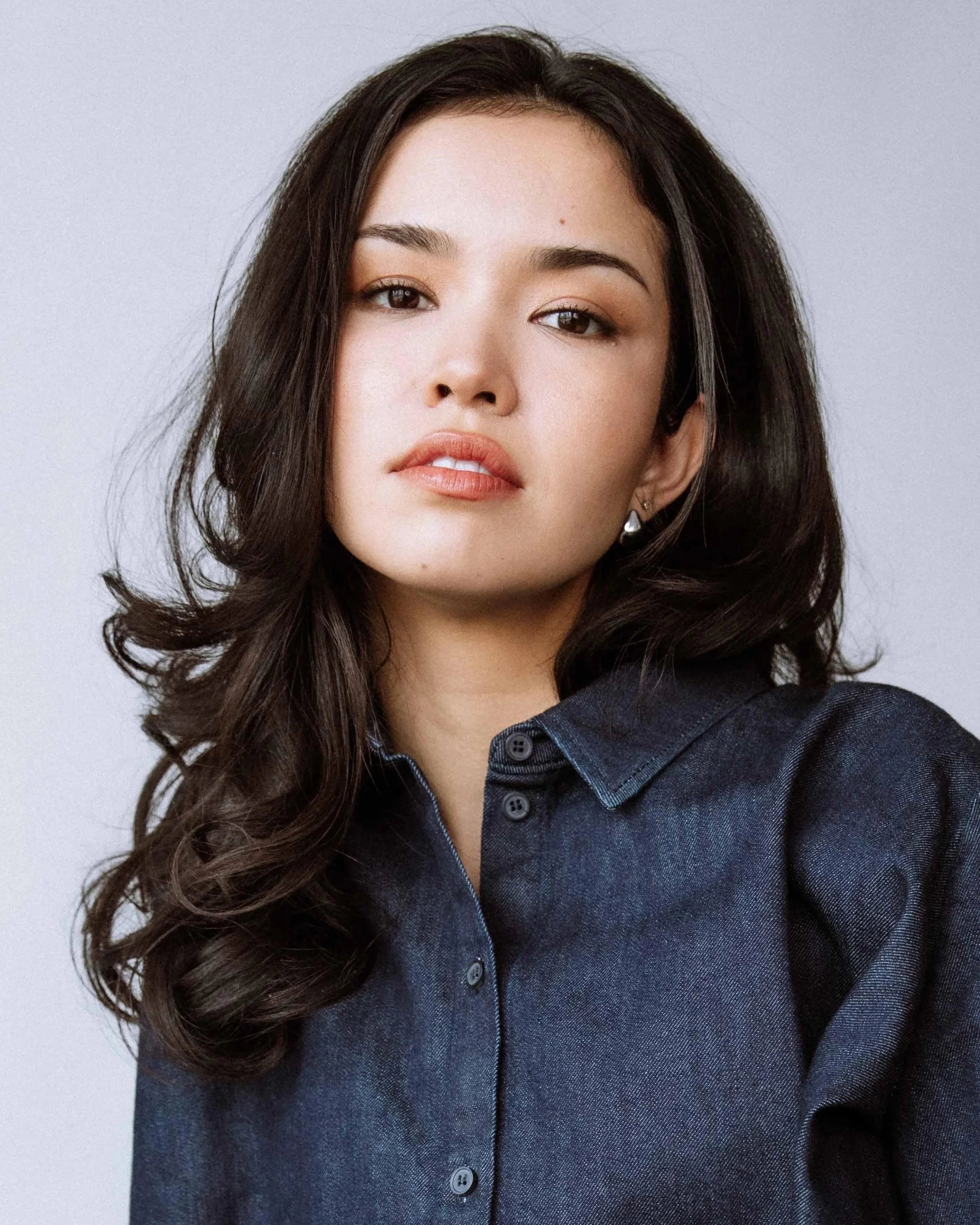
Actress Erika Prevost
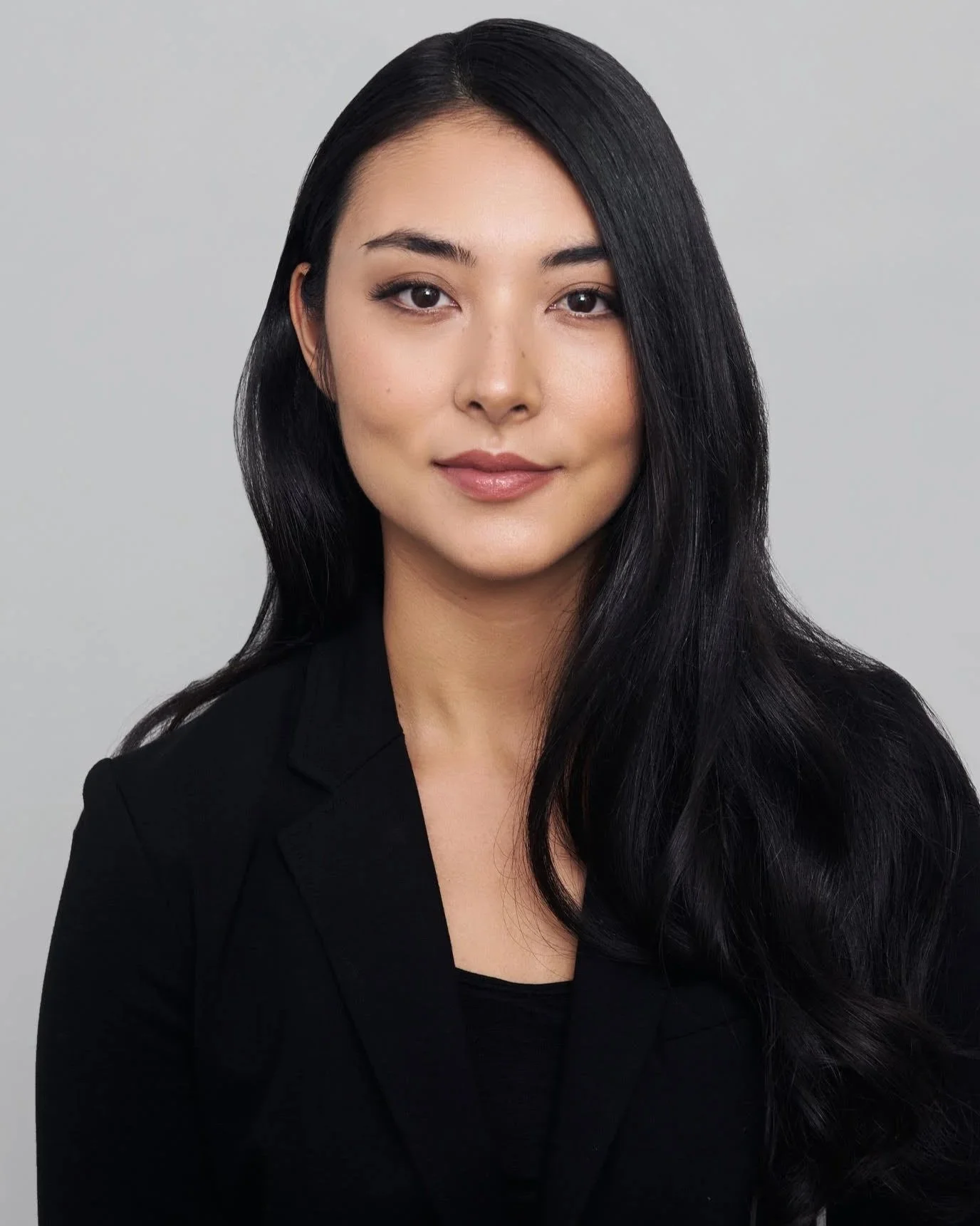
Director Kaayla Whachell
Every summer for the last ten years, wildfires have ravaged towns across British Columbia, leaving devastation in their wake.
Send the Rain tells the story of Erika, a young Okinawan Canadian woman who travels to rural BC to convince her Oba (grandmother) to evacuate as growing fires threaten their family farm. It is a battle of wills as the flames close in: Erika is convinced that Oba would be safer with her in the city, while Oba believes that Erika needs the farm.
Tucked between shots of Erika’s odyssey are scenes from the past — of her late mother’s fraught relationship with her father, her grandparents’ purchase of the farm, and Oba’s experiences as a child in Okinawa during World War II.
Alongside her co-director and co-writer Hayley Gray, Kaayla Whachell is the driving force behind this film. Raised in BC and of Okinawan, Red River Métis, and Czech descent, Whachell is a cinematographer now making her feature directing debut. Leading actress Erika Prevost (coincidentally named) grew up in Kobe and Montreal, with a background in dance that blossomed into an acting career.
I had the opportunity to sit down with these two just hours before the world premiere of their film at the Vancouver International Film Festival.
*This interview has been edited for clarity and length.
Interview
Hayley Lee Palmer: I read that the character of Oba was based on a combination of the Okinawan women in your life. What inspirations did you draw on to create this character?
Kaayla Whachell: If you ever go to Okinawa, you’ll notice that it's very different than mainland Japan. It's a little bit like Hawaii – islander vibes. You're sitting on the beach a lot, and the women all perform a lot. They love to sing, they love to drum, they’re very loud. When we were casting, a lot of Japanese women came to audition, and it was really hard for them. I was like, "Be louder, be louder!” and they were like, "Why would we do this?”
For me, growing up with these women, they would sing really loud, pinch my sides, and be like, "You've gained weight”. They were just very funny and blunt. But it's very loving, and I think it's a part of Japanese culture that you don't see often.
HLP: And Erika, did you find yourself drawing inspiration from anyone, real or fictional?
Erika Prevost: I feel like I drew a lot just from my own experience of being a mixed person, and conversations with Kaayla, and this feeling of not really belonging anywhere. I'm half Japanese, but I grew up here most of my life, so I'm very Canadian. And my mom immigrated from Japan when she was like 30, so she grew up in Japan her whole life. So [I related to] the kind of friction of not understanding each other that's very present in Erika and Oba's relationship in the movie.
Erika really has these questions around identity and whatnot, and Oba’s like, "What? You have a roof over your head. We're not at war. What's the problem?” And that kind of missing each other, I think I have different versions of that with my mom.
HLP: There’s a really beautiful scene where Oba dresses Erika in her kimono. Can you tell me more about that scene and what it was like working with Sachiko [Tsujimoto, who plays Oba]?
EP: Oh my God, that was one of my favorite moments in the movie. There was something really special about that scene, and I think it was the way that Kaayla held that space too. We made it a closed set when we filmed it. It’s not an intimacy scene [in the way we usually] understand what intimacy scenes are, but there was something really delicate [about it].
I felt like we filmed it in a way where we were very protected and safe and intimate. It allowed Sachiko and me to connect in that moment, and there [is no dialogue], so I remember having a visceral reaction while we were filming it, and that was captured on camera, which is so cool.
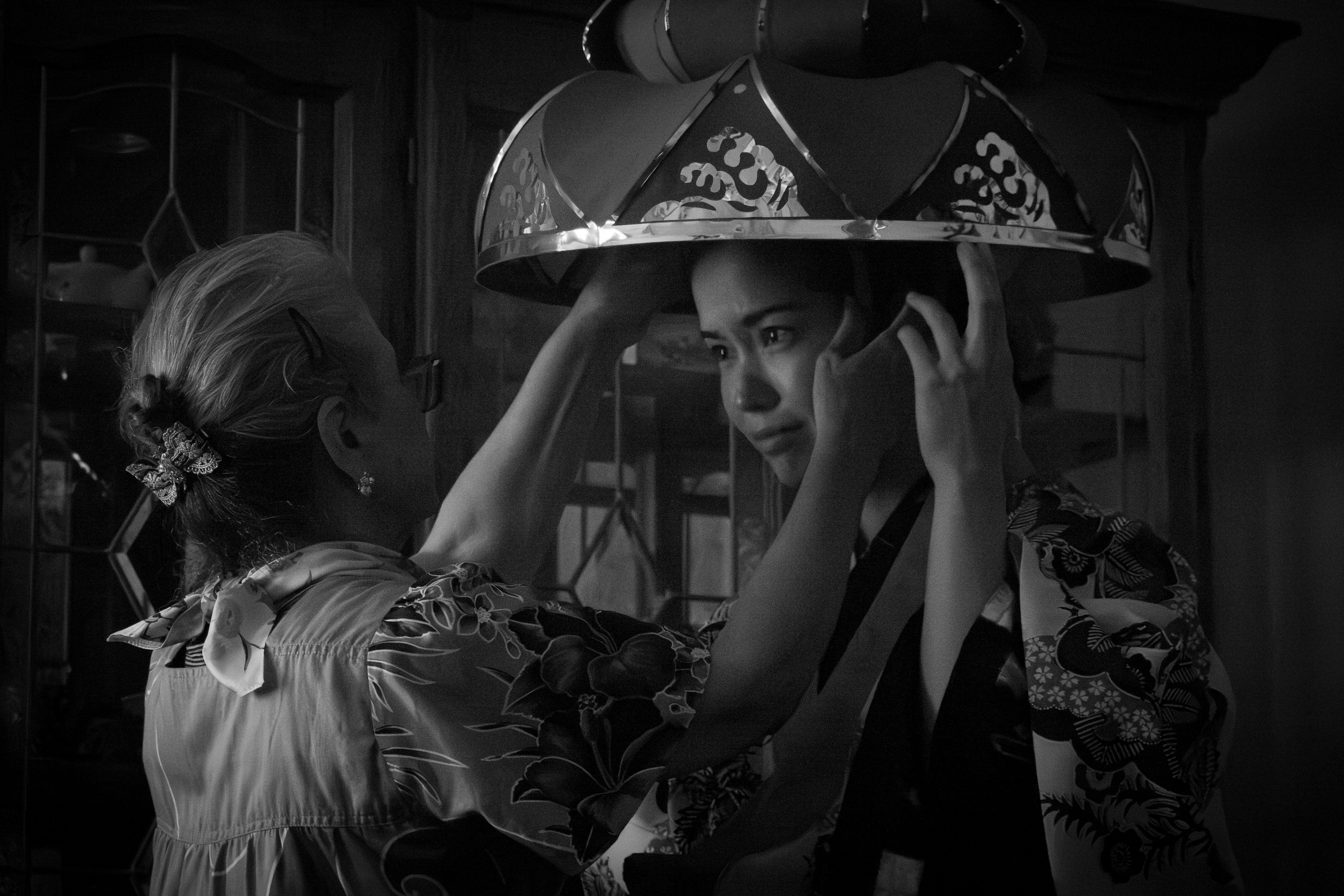
From left: Sachiko Tsujimoto as Oba and Erika Prevost as Erika in Send the Rain
That moment felt like the culmination of Erika's journey of understanding her identity in a way that she hadn't before. I don't think it's a moment where she understood it intellectually, but it was like her body felt the heritage of her Oba and everybody that came before her that allowed her to be where she is now. It was a really beautiful scene, and getting to work on that with Sachiko too… She was dressing me, and you could see in her face that it meant everything to her, and we were able to take that time [together].
HLP: It was so beautiful. And you seem so happy talking about it right now too. How did you feel directing that scene?
KW: I thought about that scene a lot. So the Hanagasa–which is the big hat that she's wearing–women only wear that in Okinawa. And I watched this movie as a kid where people make fun of an Okinawan woman for wearing that hat. I [thought] there was something interesting about that, and that image is so striking.
When [Erika’s boyfriend] Finn sees her for the first time, he's so shocked, like he's seeing a part of her in her truest form–like it’s either her Oba or her mom. I felt like it was so striking that he can't even say anything. I just wanted to show the audience that without words.
HLP: I like what you said about how it was a full-circle moment of her understanding of her identity. I noticed that when Oba speaks to Erika in Japanese, she always answers in English until the halfway point of the film, when she starts responding in Japanese. What did you want to signify about that switch?
KW: My grandparents never learned English, and I don't know Japanese, so when I was growing up it was very hard to communicate with them. But I feel like you find your own ways, even if you're not replying in Japanese. It might not be the right word, but they understand you the more time you spend with them. It was great that Erika actually speaks Japanese because even for me, like Sachiko and I are very close, but sometimes I have to break out Google Translate to communicate with her. I feel like that's a lot of people's reality, especially here in Vancouver.
HLP: That’s definitely my experience, speaking to my grandparents. Erika, for you, what was it like getting to speak Japanese on this set?
EP: I love it. It's such a gift to be able to act in different languages. It [feels] like your body has stored certain memories of when you spoke that language growing up. Japanese was the first language I learned, so it's very different than performing in English. To be surrounded [by this] Okinawan Japanese Canadian story, it wasn't just that I was showing up as a Japanese performer. The entire story and the creatives behind it were connected to that heritage from the beginning, so coming into that set [felt] like a puzzle piece.
KW: Casting was a huge part of this film, and the crew as well. Our directing assistant, Lilia [Miki], really helped with the language and a lot of cultural aspects of the film. If we didn't have these Japanese Canadians as well as the Okinawan community [involved], the film would be completely different.
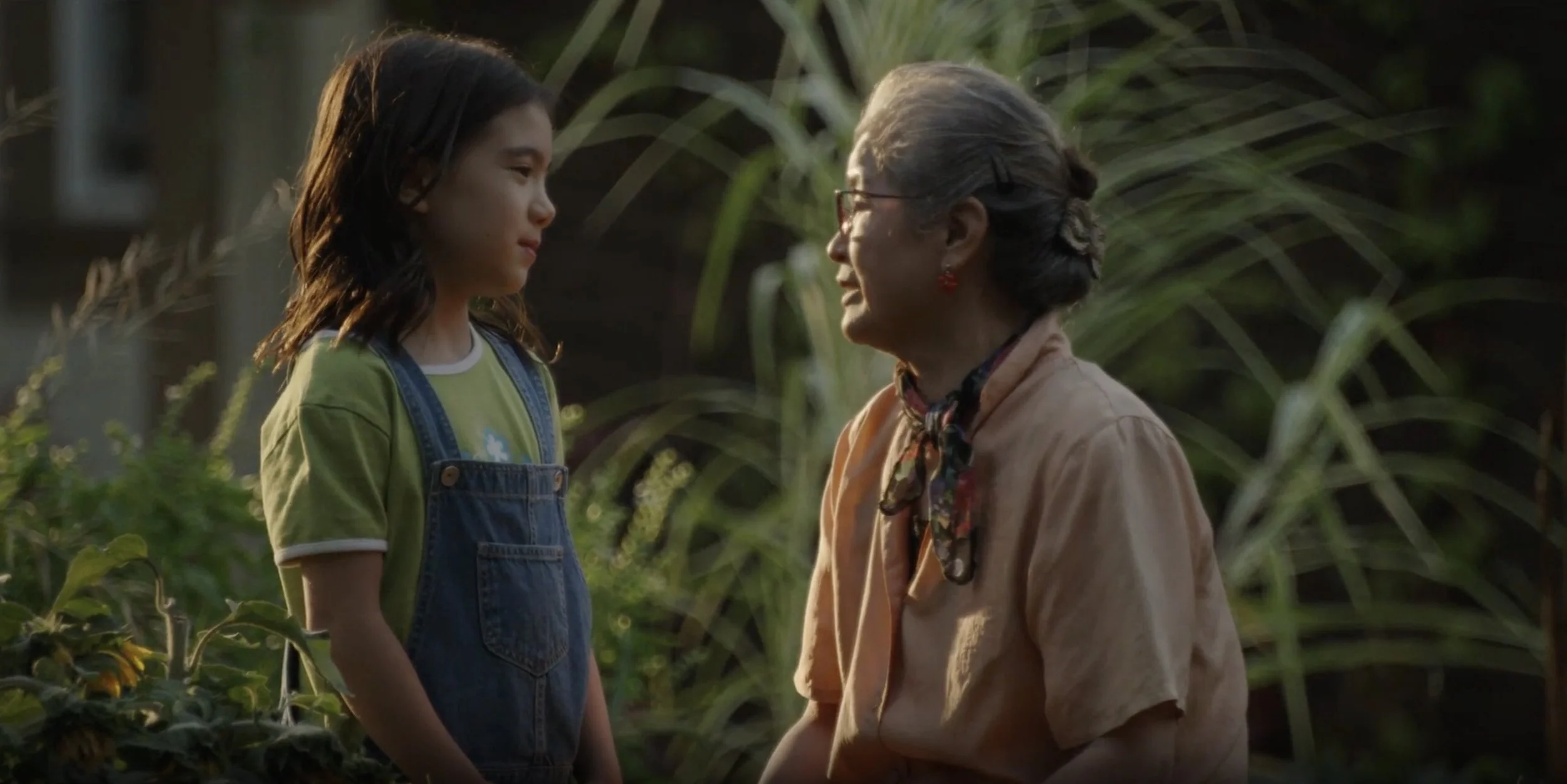
Yuina Kubo as young Erika and Sachiko Tsujimoto as Oba in Send the Rain
HLP: There was one scene where Erika tells her Oba, "I'm so different. I'm not Okinawan, Japanese, or white like Dad.” And her Oba says, "I don't like hearing this kind of talk.” What did you want to say with this scene?
KW: It's exactly a conversation I've had with my grandparents. where you don't really understand what [the other is] saying, and you just leave frustrated. I just really wanted to showcase that you can't really ever win, being Asian Canadian. Even when you try to describe it to people. For myself, I'm constantly trying to be like, “I'm a part of the Japanese Canadian community,” but I'm very much Okinawan, and there are cultural differences [between the two]. A lot of times it's very hard for people to understand that.
EP: I think for me, that scene was really just the confusion of, “Where do I fit?” But also the frustration of not feeling seen by somebody who loves you so much.
HLP: There was a line that really stuck with me. Oba is talking to her friend and says, “Okinawa is nothing like how we left it, but we haven't changed a bit.” Kaayla, can you tell me what you're hoping audiences will take away from that scene?
KW: That is a line that I've heard so many people say, because when they left Okinawa, it was still very much under American occupation – that's why there's a lot of Spam in the film and little [nods to it] like that. I just hope people learn about Okinawa and how it is a place that’s so rich in its culture and so different. And hopefully they go there and experience it.
End of Interview
Send the Rain had its world premiere at the Vancouver International Film Festival earlier this month. It received a Special Mention for VIFF’s ARBUTUS for Outstanding BC Film.
Hayley is a Vancouver-based writer and marketing/communications professional who is passionate about championing diversity in sports and entertainment. She spends her free time sitting around with friends, re-reading the same books, and playing ice hockey. You can find her on Instagram.