Writing from Liminal Spaces: A Conversation with Anne Liu Kellor
Mixed Asian Media - October 26, 2026
By Mary Pan
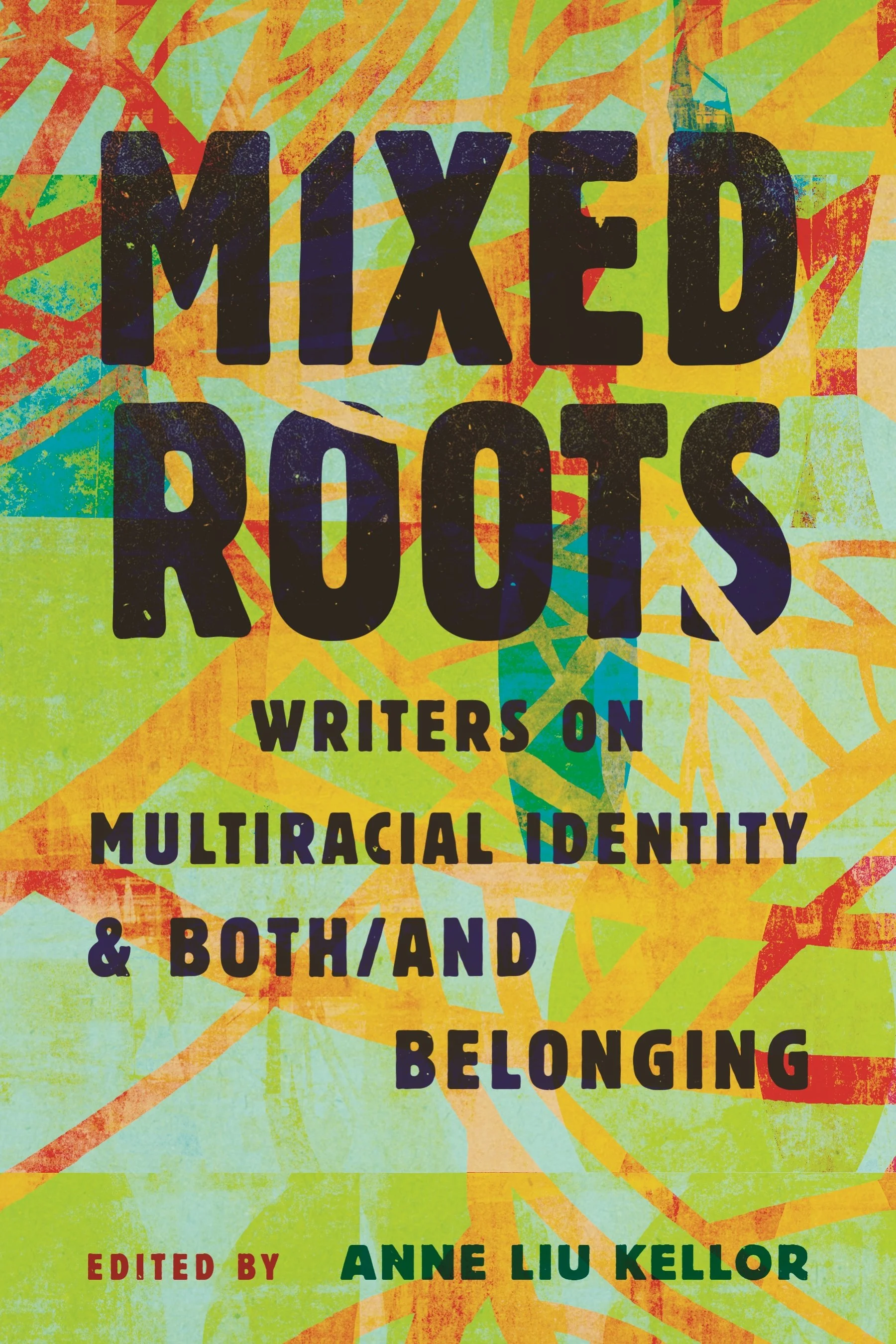
Editor Anne Liu Kellor broadens the conversation around the mixed-race experience in Mixed Roots: Writers on Multiracial Identity & Both/And Belonging (Beacon Press, 10.13.26). This collection excavates paradoxical truths from a wide range of voices, bringing together 29 personal essays from celebrated contributors such as Savala Nolan, Grace M. Cho, and Malaka Gharib, as well as from a wealth of emerging writers that belong to Kellor’s writing and teaching community in the Pacific Northwest.
As a mixed-race writer and mother myself, I felt seen and heard by this book. It’s helped me to accept and challenge myself and my place in this world, as it will for others who live in a liminal multiracial space. Kellor’s care in compiling these important narratives stems from years of teaching her celebrated Both/And writing workshops for mixed-race people, which I had the pleasure of taking part in. These workshops provide space for the mixed-race experience to be shared, messy, wrought, and embraced. This book, Mixed Roots, does the same.
A diversity of forms–such as personal essays, epistolary pieces, a multiple-choice test, and graphic memoir–fill the collection, as do writers who come from a wide range of generational and cultural backgrounds. The essays in Mixed Roots explore themes like privilege, racism, ancestral trauma, and living in in-between spaces, however they go beyond common tropes such as not fitting in or being “enough” of something, and ultimately deepen the narrative. By examining mixed-race experiences from multiple angles and forms, these writers enter into conversation with one another, creating a community of dialogue and voices that so many mixed-race people have yet to find in physical spaces. Common threads include: examining how one’s self-identification can change over the years, codeswitching, the impact of growing up in white-dominated spaces, and intergenerational trauma and erasure. A timeline of historical context in the appendix, as well as history woven throughout many of the essays, speak to the ways society has invented and been wounded by racial categories–leaving us with an imperative to grapple collectively with our interconnected future. In a time of increased polarization, Mixed Roots spurs and complicates the discourse around racialized identities in ways that we all need.
Interview
Mary Pan (MP): In your Introduction, you write “what seems to connect us the most is that sense of having grown up not fully belonging, of being othered, of code-switching or shapeshifting between worlds, bringing forth some parts of ourselves while holding other parts back in order to fit in.” You’ve taught workshops on the mixed-race experience and this is clearly a personal journey you’ve also explored. What did you learn and how did your perspective on this issue change through the process of publishing this book?
Anne Liu Kellor (ALK): Teaching the Both/And workshop for mixed folks over the years was the first way in which I began to learn what it feels like to be in a room—and in conversation—with a group of multiracial people. Although I’d read all I could from mixed-race authors for decades, I had never had this experience before, beyond perhaps a ten-minute break-out session in a workshop with people I would never speak to again. So it was revelatory for me to be in community with mixed folks, just like it was for many of my students.
Through teaching the workshops, I knew what common themes I wanted to include in the anthology, many of which were already present in the essays by my students. Then I went looking for work by established writers I admired whose work expanded the conversation further, and whose work could make the anthology more ethnically or stylistically diverse. What I’ve learned through both processes is that in order for any conversation or piece of writing to go deeper into more vulnerable terrain, there needs to be a sense of trust that’s been developed–whether between student and co-learners, or between a writer and editor.
Now that the book is close to coming out, I’m excited to see what new conversations it spurs in the world. Most of us in the anthology didn’t grow up with mixed-race topics taking center stage. This generation is different. The collective conversation has been receiving more attention in recent years, our demographic numbers keep growing, and as such, more young people are better equipped to take the conversation to the next level. But I still see a need for us to take our conversations deeper, beyond common tropes like dealing with the “what are you” question or worrying we are not enough of something to claim it. Regardless of our background, I believe that we all can benefit from telling our intimate, complex stories and from learning to locate these within larger issues of racial equity, white supremacy culture, antiblackness, and one’s personal responsibility to leverage privilege and address harms.
MP: Several of the essays explore the aggression of being asked, “What are you?” Faith Adiele advises the mixed-race community: “that question is not your problem.” This question does seem pervasive. Whose problem is it? Is it possible, or necessary for the mixed-race community to come up with a collective response?
ALK: No one is required to answer anyone else’s questions—especially a stranger’s— about their race or ethnicity. Just as Savala Nolan points out in her essay, “Please Don’t Ask Me What I Am,” we would not expect others to answer questions about their religious beliefs or financial status or any number of things, unless we were close to them or shared some connection that warranted that kind of questioning. The problem with this question relates to the ways that we are trained to see people through stereotypes or reductive lenses. We think we know something about someone if we learn they are X, Y, or Z, but the truth is, we know nothing if we don’t know their story, narrated by themselves.
In some of my workshops, I invite students to send me quotes from their writing near the end of the course, and then I arrange them into a group-authored piece. Often, these quotes will echo each other, especially since students have been working from the same prompts, e.g. “Who are you?” or “Where are you from”? These collaborations feel like the only way a mixed-race community can collectively answer such a question—not by finding one singular answer that works for all of us, but by collaging together our many voices, some of which may echo, and others which may contradict each other.
MP: Place matters. Where we live and who we are surrounded by impacts our self-perception. Grace M. Cho explores her childhood in a small town in Washington state, where she was one of only three Koreans among a largely white population. How does place factor into our experience as mixed-race individuals?
ALK: Many mixed people have grown up in white-dominated communities, and as such, felt isolated and pressured to assimilate to white cultural norms. Others have grown up in large cities where there is more racial diversity, but that doesn’t necessarily mean that these people had a community of mixed friends; sometimes it can just mean that they feel pressured to conform to whatever racially-influenced social circle is most dominant, and to erase other parts of themselves. This was my story, in a way, growing up in Seattle.
Now we hear how Seattle is one of the cities with the largest mixed-race populations (and Asian American populations), so you would think that I grew up more enlightened about my mixedness. But the schools I went to in the 80s and 90s were still either majority white, or segregated between two dominant social groups: white, upper class kids bussed into the Central District, and Black inner city kids who lived closer to where we went to school. The older I got, the more my friend group became more white, and the more I assimilated to the “side of the cafeteria” that I seemed to belong to. But when I then attended a mostly white liberal arts college, I realized I was the “diversity” in the room—and I gradually cultivated a deep longing to reconnect with my Chinese heritage and language, as well as with an Asian American identity, born out of solidarity with other people of color.
Now, living in Seattle again, I still find myself primarily in white-dominated spaces, but I have also intentionally sought out more friendships and communities with other mixed folks, Asian Americans, and people of color. Now, I know that no matter the place, I get to create my own community. I’m finally at a place in my life where my friend groups are more multiracial and where my whole self can show up in community more often, versus being in spaces where I am always questioning how I may be othered or seen. Sometimes I still envy those who live in more multiracial neighborhoods, but I also know now that we don’t get to just passively belong to a community by proximity, no matter where we are. It takes effort and intention. And now, we can also find more of “our people” online. It’s not the same as in-person connections, but it can also be deeply healing if we feel isolated and don’t have people who “get us” where we live.
MP: Several of the writers comment on being mixed white (oppressor/colonizer) with another race that was or is oppressed/colonized. What specific issues may arise for people mixed with white? What is the value in exploring this as an individual, collectively as a group, or for the broader society as a whole?
ALK: This is an important question, because so often you hear people saying that we shouldn’t center whiteness in the conversation about mixedness, because yes, absolutely, to be “mixed” does not just mean mixed with white. And yet. To mix anything with white was the original taboo. Especially to be mixed Black and white, given our country’s legacy of slavery; racialized mixing threatened the whole colonial project which was built around ideas of white supremacy, Manifest Destiny, and white entitlement to seize land, resources, and people from their families. So, the one-drop rule was created, which said that if a person had so much as a drop of non-white blood, they were not white; specifically, the one-drop rule was created for Black people in order for whites to own more slaves, and later it was also applied to other non-white people. Interracial marriages were also banned between whites and Blacks, and later between whites and Asians and other groups– but less so between whites and Natives or Mexicans– the better to seize their land. This is the legacy we are coming from. So it’s an important one to keep unpacking.
Under the current binary of white vs. people of color, all mixed people should be considered people of color. But the more that bloodlines are mixed, it gets trickier. How much “color” still counts, especially if one can “pass” as white. Belonging and fractions are policed on all sides, whether by the so-called descendants of colonizers or by the descendants of those colonized or formerly enslaved. For mixed people, we can simultaneously be an “us” and a “them” within our families and our cultures. And even if we are mixed with white but don’t look white and are not treated as white, we may still have light-skinned privilege or other white adjacent privileges— such as inherited wealth from our families. Yes, our being mixed may have given us a lot of confusion and trauma and a lifelong sense of erasure. And, it might have given us a lot of advantages too in our white supremacist, capitalistic systems. So there is a LOT to unpack here. A lot that we share with all mixed people, and a lot that is specific to being mixed with white.
MP: “I wasn’t always a person of color. Today I call myself Latina, but until I was in the sixth grade, I had no concept of race or ethnicity,” writes Leticia H. Lopez. How we define ourselves evolves over time. What are the different factors that these writers experience that alter how they define themselves? How might this anthology, and broader conversations in society, inform these factors?
ALK: Beyond where people grew up, what race/ethnicity they are, and how many others they knew who were “like them” in their communities, there are definitely generational differences that have shaped us. The conversation around race, privilege, antiblackness, and whiteness was less evolved in past generations, and less intersectional. Now, if you go looking for it, there are so many more resources for mixed folks and more conversations happening online—including conversations that move beyond assuming that “biracial” means Black and white by default, or beyond only considering the United States’ concepts or terms for race/ethnicity. So the conversation is getting both broader and deeper. And young people are leading it.
This anthology is a part of that conversation, bringing together writers from their late twenties to their seventies. Maybe future generations will look back on some of our self-discoveries as being so “old school” or obvious, but also, maybe not. In the grand scope of things, it hasn’t been that long since slavery was practiced in the United States, and these wounds and systemic inequities are still so very present. The writers in this anthology are giving voice to so many past harms that have reached through the generations and shaped us—and they are reaching out to future generations and saying, take it from here. Tell me what you still relate to. Tell me what is also changing.
MP: “Being African was a liability, I learned quickly, but maybe being Asian could shield me.” Leslie Nguyen-Okwu learned this was not the case, though her parents “believed that dialing down my Blackness would soften my edges.” How might code-switching benefit and be detrimental to mixed-race individuals?
ALK: Historically, you could say that code-switching or shapeshifting has been beneficial when it protects our safety or opens doors that are closely guarded. At the same time, it can be a weight, a burden, or a vice, if taken to extremes. I think the more unconscious it is, i.e. the more you don’t even realize you are doing it, the more harmful. But if you start to build awareness and an analysis about what contexts you codeswitch in and why, then it can become more of an active choice. Dr. Leticia Nieto and Karine Bell co-authored a piece in the anthology called “Belonging in the In Between: The Dignity of Ambiguity and the Power of Shapeshifting” that explores this topic beautifully. Code-switching doesn’t have to mean hiding part of yourself or being deceptive. It can also be viewed as a way that we have learned to be flexible, adaptive, and strategic in our efforts to be seen and heard. It’s not necessarily becoming someone who we are not, but rather a way of relating to or surfacing some parts of us that are authentic in one context, and other parts of ourselves that are also authentic in another. That’s why, for some of us, the gift of finally being in a mixed-race centered community is that we can speak to or from all of our cultural influences without fearing that this will cast us into the role of “other,” or that our belonging will be stripped once we reveal that we can also find belonging elsewhere.
MP: Jeannie Messer’s mother leaves Vietnam to join her husband in Australia; in order “to survive, she puts Vietnamese things away: language, customs, and religion first….” What impact does intergenerational erasure, often for survival, have on mixed-race offspring?
ALK: It has a huge impact. Even if we aren’t conscious of the erasure that’s happened until we are older, as children we sense our parents’ fear and trauma. We might grow up in a family where secrecy is paramount, or where we are encouraged to tell lies or keep “dirty laundry” private. We might grow up with only a spotty sense of our own family’s history, yet still absorb all of its sadness and pain. Trauma gets passed down, regardless of whether we talk about it. Perhaps especially if we don’t talk about it. For the mixed-race children–or for any of us–who are denied huge parts of their cultural inheritance and traditions, we can grow up feeling disconnected from our people, like we don’t really belong in our heritage cultures, or like we are severed from our roots. And that, of course, leads to a desire to assimilate into dominant norms—which is so often whiteness. Whiteness carries its own long history of pain and trauma that’s been stuffed down and passed on in white families for so many generations as well. So any way about it, silencing family history = erasure and inherited trauma.
MP: Several of the essays talk about the “in between” or liminal space that we exist within as mixed-race people. What is the impact of existing in a liminal space?
ALK: It can both be confusing, and liberating. Often, when we are younger, feeling caught between cultures is confusing and leads to us lean more towards identifying with one of our ancestries (and then sometimes doing a 180 later in life to course correct). But if we can learn to befriend this liminal space, we might also see how freeing it is to not have to contort ourselves to fit in one fixed definition of who we are. We can be our full, expansive self, a self that gravitates towards acceptance of multiplicity and that pushes against binaries. A self that perhaps is more open to complexity, nuance, and change. I say “perhaps” because it’s important to name that mixed people are not a monolith, and many are just as steeped in binaries. It takes a lot of introspection to recognize when we find ourselves in liminal spaces—whether around race, or in other transitional phases in our lives.
Liminal spaces can also be terrifying, like how the world we are living in right now is forcing us to reckon with climate change and huge global political shifts. But there is also something cosmic and universal in embracing liminality. Buddhism teaches us about impermanence and how change is the only constant, and now, We, the People, are being forced to learn how to adapt to change more than ever, or at least it feels this way. So to be skilled at living within liminal spaces in our psyches can be seen as a gift or an advantage in these times.
MP: At the end of the book, you give a history of laws and policies related to race and mixed-race groups over time. I found this history particularly powerful because, as you noted, most of this was not part of a standard history curriculum. Why do you think these historical truths have been ignored for so long? What value do you see in bringing it to the forefront?
ALK: There is so much we are not taught about the history of people of color in this country. Mixed-race people are another layer of this omission, and we complicate the narratives all the more. We make the ability to make broad generalizations about people and racial groups more challenging and messy. Our stories for so long have been seen as belonging only to a small subset of people, anomalies, as opposed to the growing numbers of us there are today. But beyond demographic shifts, we have been around a long time. Most Latinos and African Americans, for example, are multi-generationally mixed, and originally by force–by colonization, rape, and slavery. This is not a pretty multicultural history that we can be proud of. It’s a painful one. So it’s not one that many want to readily surface or embrace.
But now, more and more people are choosing to intermarry with people of different racial/ethnic backgrounds out of love, out of choice. Now, the narrative is changing, even if the pain is still there, buried underneath–and so close to the surface. Belonging to a country like the US, we have the opportunity to expand our affinity with who we claim as “our people,” since as Americans we come from all over. How can we learn to claim our interdependent story?
We’ve been going down the path of racism and divisiveness for too long. We can do better. We can learn to reinhabit our shared humanity. Climate catastrophes will increasingly show us that we are all in this together. As we continue to share more heartache over our changing earth, can we simultaneously learn to listen more closely to each other? To truly hear each other’s stories? How can we lean more into how similar we are as human beings, without being afraid to also name our differences? One vehicle is through sharing our stories, steeped in an awareness of our interconnected histories. I hope that this book will help to do this.
End of Interview
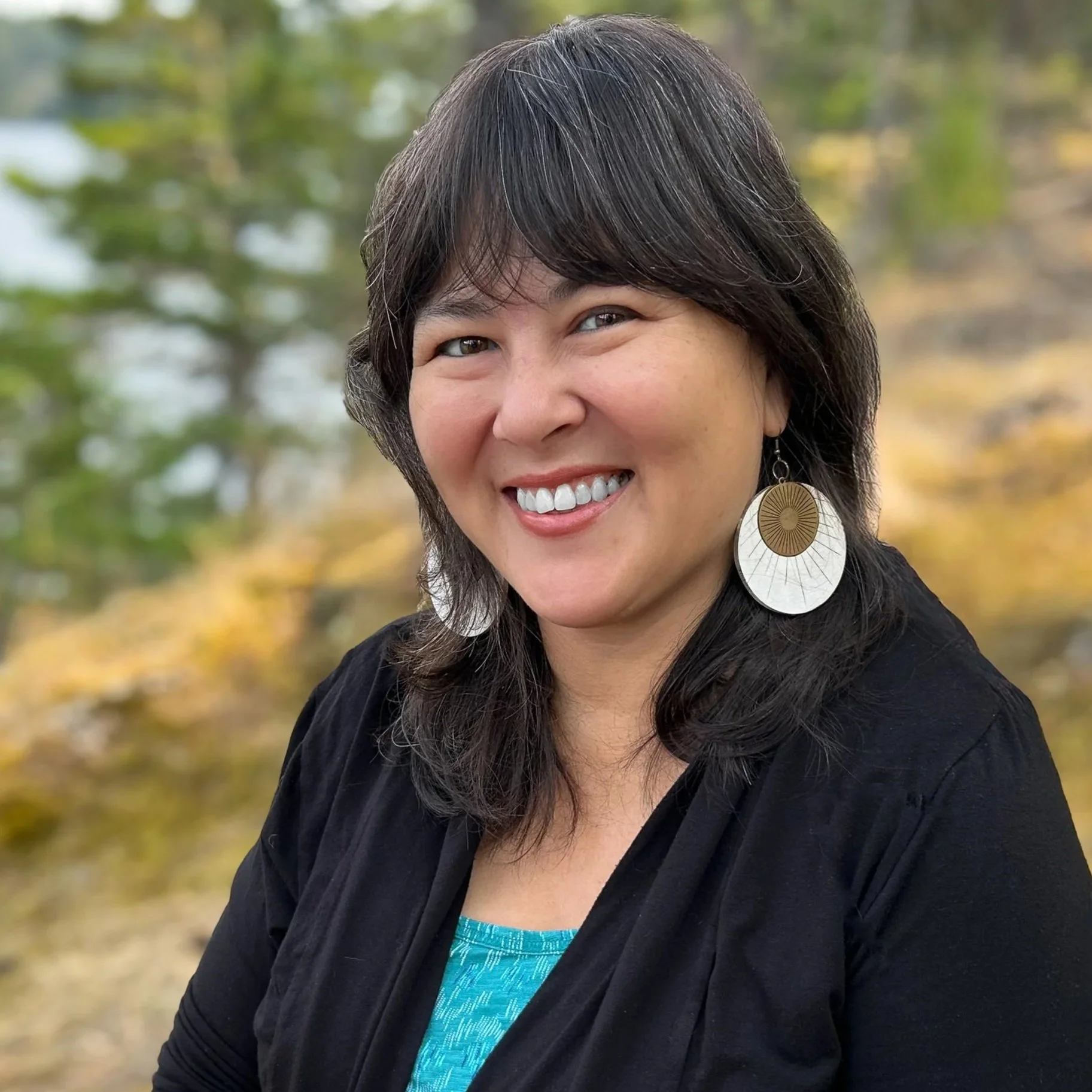
Anne Liu Kellor is a mixed-race Chinese American writer, developmental editor, and teacher based in Seattle. She is the editor of Mixed Roots: Writers on Multiracial Identity & Both/And Belonging and her memoir, Heart Radical, was a Washington State Book Award finalist. Kellor's essays have appeared in publications such as Memoir Land, Longreads, New England Review, Fourth Genre, Witness, and YES! Magazine, and she has received fellowships from Hedgebrook, The Whiteley Center, The Seventh Wave, and more. She loves helping other writers tell their stories through her work as a creativity coach and facilitator of writing workshops online and beyond.
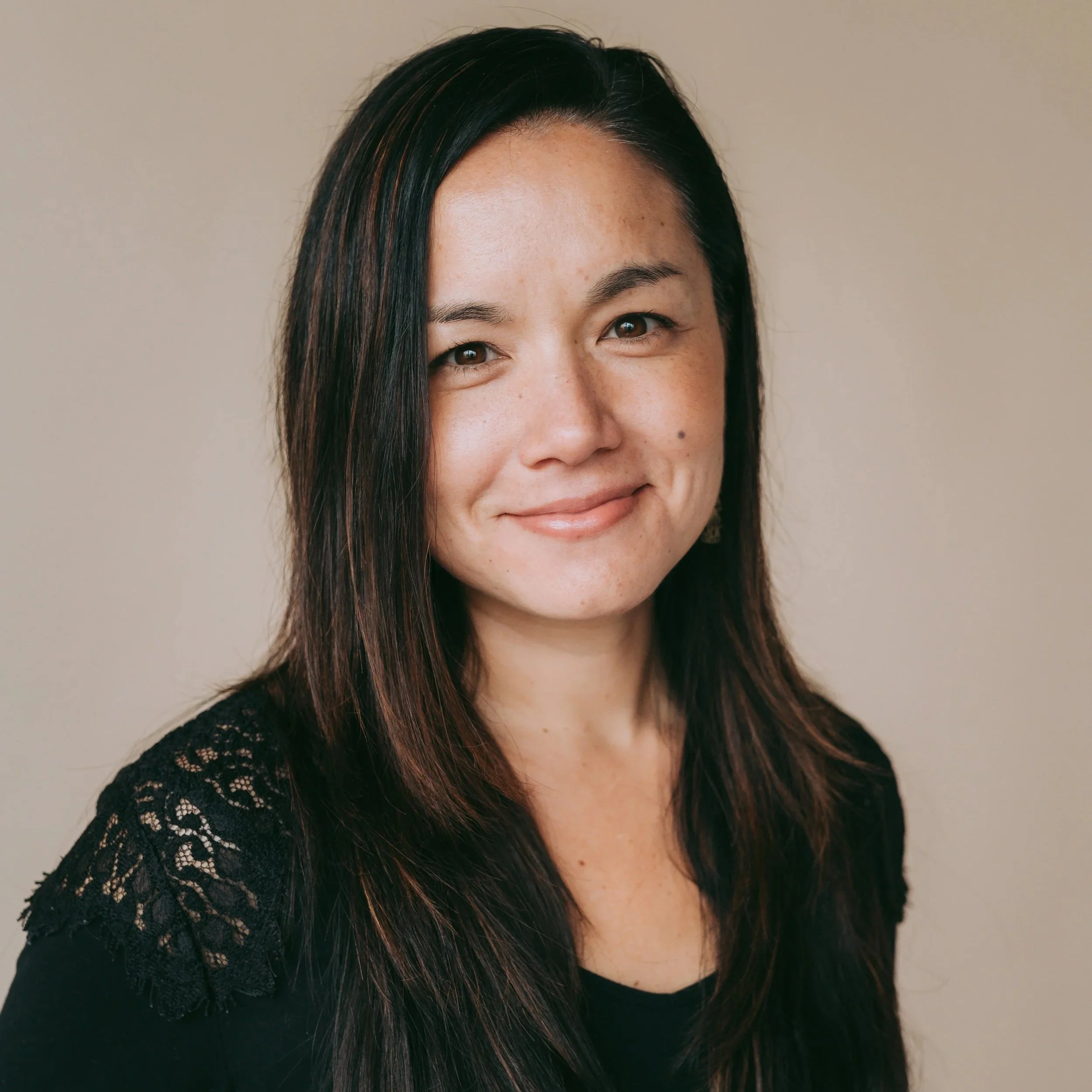
Mary Pan is a writer and physician with a background in global health and narrative medicine. Her work has appeared in Fourth Genre, Creative Nonfiction, McSweeney’s, Intima, and elsewhere. She has been selected for workshops, retreats, and residencies with Tin House, Hedgebrook, Kenyon Review, and Centrum, and is a Harvard Media & Medicine alum. The recipient of a 2019 Artist Trust Grants for Artists’ Projects Literary Award, she was runner-up for AWP’s 2020 Kurt Brown Prize for Creative Nonfiction. She is currently working on a memoir in lyrical essays about caregiving, caretaking, and retrospective becoming.